
The Final Test of Eternal Recurrence
Thus Spoke ZarathustraThis flow follows eternal recurrence from an abstract temporal riddle to a personal crisis and finally to affirmative song.
increasing Bearing strength in each event
 decreasing
Bearing strength in each eventdecreasingThe Demon’s Question
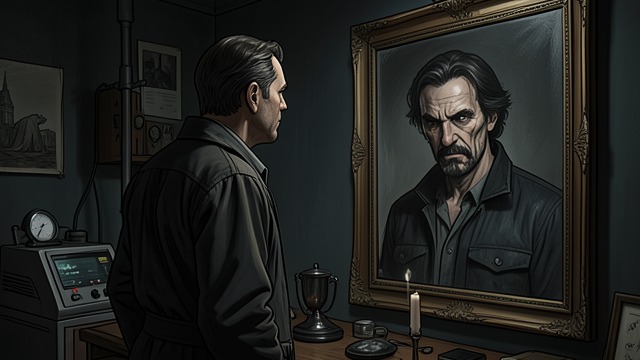
The Demon’s Question
Life imagined again
A demon proposes that every detail of one’s life must return endlessly in the same sequence. The thought tests whether a person can affirm the life actually lived.
A burden or blessing
The question could crush a person who resents existence, yet become divine to someone who wants a moment again. Its emotional force prepares the central crisis of Zarathustra’s later teaching.
The Gateway Called Moment
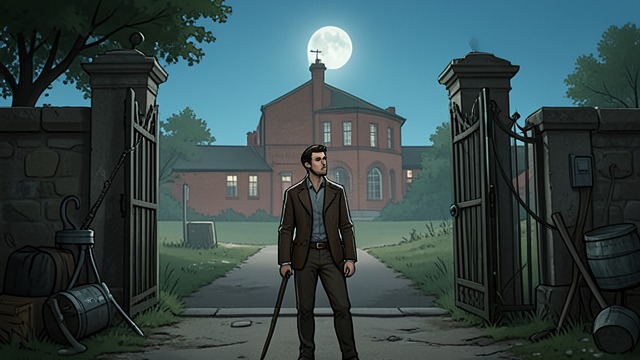
The Gateway Called Moment
Two eternities meet
Zarathustra imagines a gateway where the past and future stretch away without end. He asks whether the paths may eventually meet and every event return.
The thought turns personal
The spider, moonlight, Zarathustra, and the dwarf all enter the possibility of repetition. The cosmic riddle becomes an intimate demand concerning this moment.
The Choking Snake
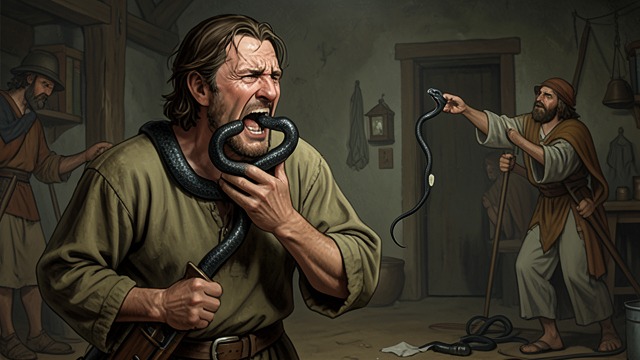
The Choking Snake
Disgust given a body
Zarathustra sees a shepherd convulsed by a black snake lodged in his throat. He cries out for the man to bite its head off, giving the vision a physical emergency.
Transformation through the bite
The shepherd obeys and becomes a laughing, transformed being. His laughter suggests a way of meeting the heaviest thought without surrendering to it.
Illness at the Thought’s Arrival
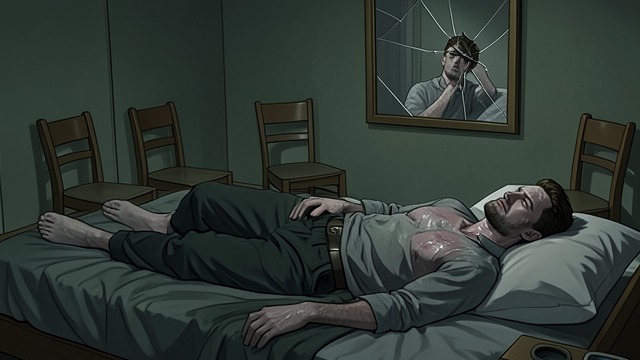
Illness at the Thought’s Arrival
Recurrence becomes unbearable
Zarathustra calls the thought up from his depths and collapses in disgust. He fears that the smallest and weakest human types, too, must return eternally.
The crisis remains bodily
For seven days he lies silent, sick with the implications of what he has taught. The episode makes clear that recurrence is not an easy slogan but an ordeal.
The Song of Once More
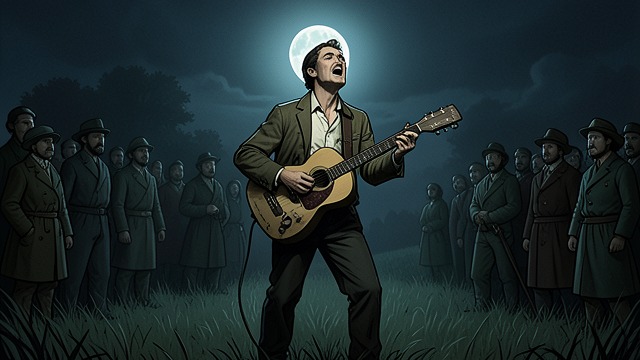
The Song of Once More
Joy includes suffering
The Ugliest Man asks whether life may be welcomed again for the sake of a single day with Zarathustra. Zarathustra’s midnight song answers that joy wants eternity and that affirming joy entails accepting woe.
A doctrine becomes music
The teaching is delivered through repeated song rather than proof. Its culmination is an emotional affirmation of the whole, including pain and return.
The Gay Science, before Zarathustra’s story
Part Three, during the vision on the mountain path
Within Zarathustra’s vision after the gateway scene
Part Three, after Zarathustra returns to his cave
Part Four, during the Intoxicated Song
